Mapping the immune landscape in high-risk early-stage breast cancers
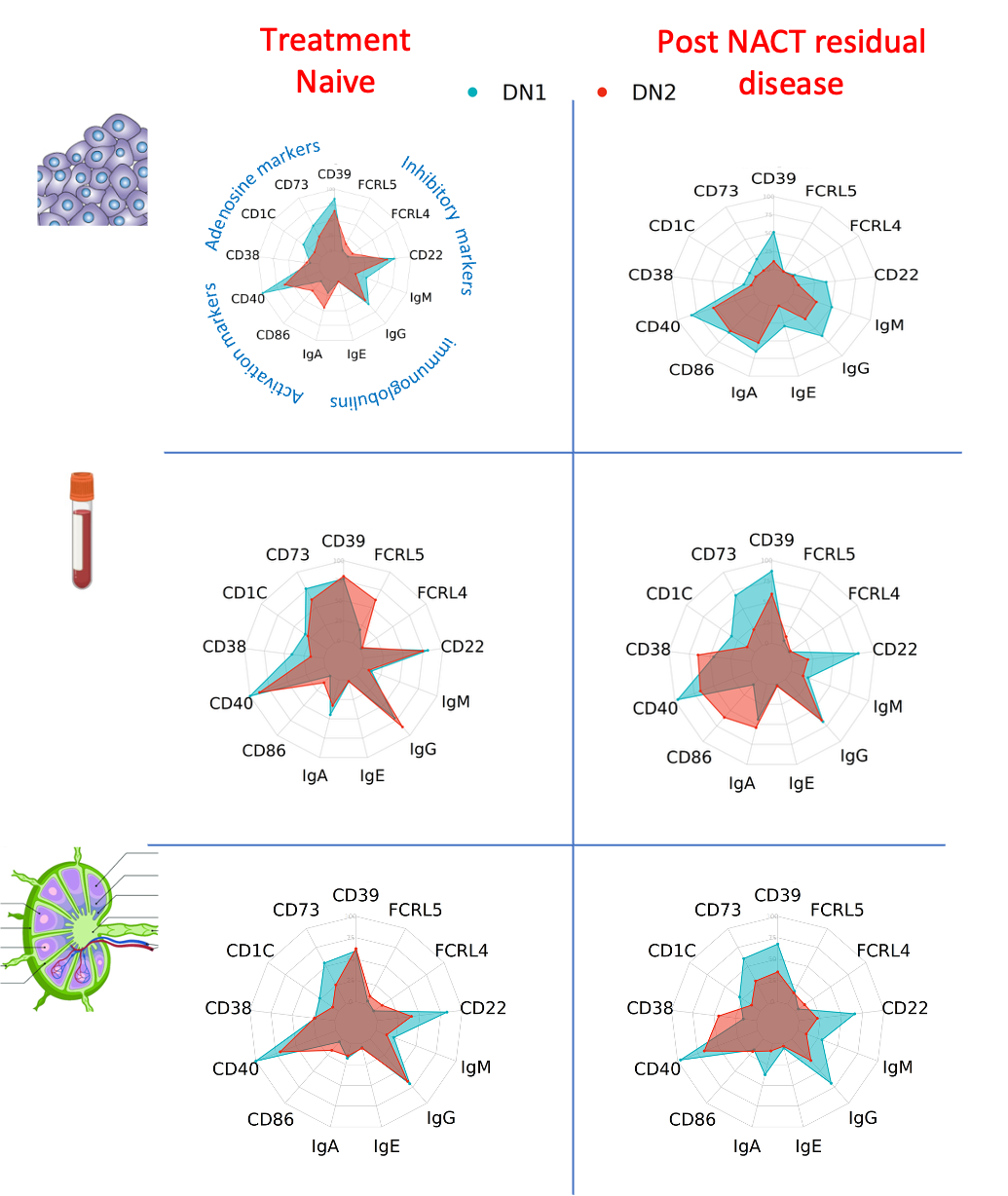
We lead a comprehensive research programme investigating the immune determinants of treatment response and resistance in high-risk, early-stage triple-negative breast cancer (TNBC), with a particular focus on the additional impact of immune checkpoint inhibitors (ICIs) when added to standard chemotherapy. A central feature of our work is the in-depth characterisation of B cell biology in this setting. We study how B cell subsets—including atypical memory populations—contribute to tumour immunity through both pro-inflammatory and regulatory functions. Using high-dimensional phenotyping and spatial mapping, we define the localisation, phenotype, and functional role of B cells across tumour and lymphoid compartments.
In parallel, we perform longitudinal profiling of circulating biomarkers, including PBMCs, serum cytokines, circulating tumour cells (CTCs), and plasma-derived exosomes. By linking dynamic immune changes across compartments to treatment outcomes, we aim to identify robust predictors of prognosis and therapeutic response. This multi-layered programme forms the biological foundation of our translational pipeline in TNBC and underpins Dr Irshad’s leadership of the Breast Cancer Now Unit at King’s College London. Further clinical development and intervention strategies related to this work are described in [2: Clinical trials & immune-informed therapies]