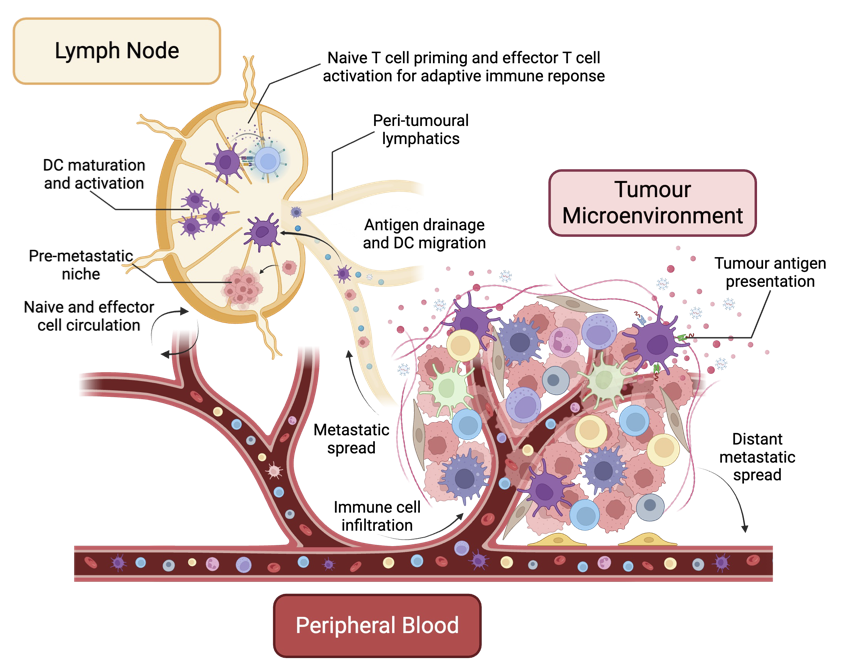
Antigen Processing and Presentation in Breast Cancer
Dendritic cells (DCs) are key orchestrators of anti-tumour immunity, serving as specialised antigen-presenting cells responsible for initiating robust T-cell responses. However, in the breast tumour microenvironment, their antigen processing and presentation capacity is often impaired — contributing to early immune evasion. This project investigates the functional states of tumour-infiltrating DCs, with a focus on the dynamic modulation of antigen presentation machinery and co-stimulatory signalling pathways. We use patient-derived tumour samples to study how tumour-derived cytokines, metabolites, and suppressive immune cells remodel DC phenotypes in situ. By combining multiparameter flow cytometry, single-cell transcriptomics, and proteomic analyses, we aim to delineate the pathways by which DC dysfunction emerges during disease progression. The goal is twofold: first, to map how dysfunctional DC subsets contribute to T-cell tolerance or exhaustion, and second, to identify therapeutic opportunities to restore their functionality — enabling stronger priming of anti-tumour T cells in the context of immunotherapy.